python
29 lines · 2 tabs
Priya Sharma
Jan 2026
2 tabs
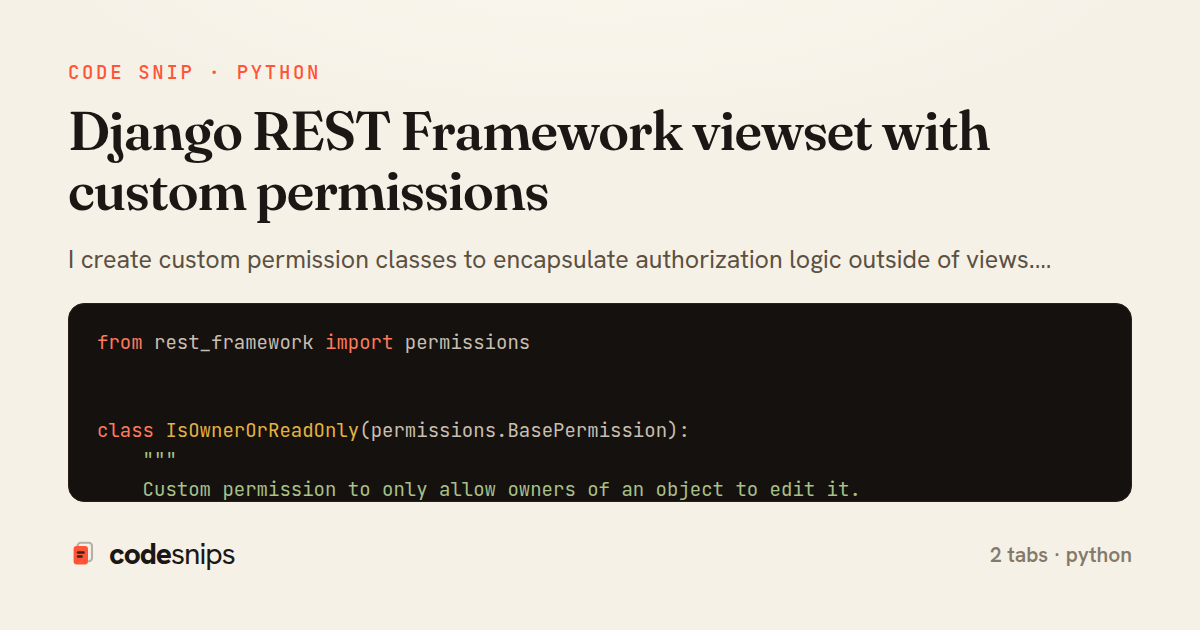
from rest_framework import permissions


class IsOwnerOrReadOnly(permissions.BasePermission):
    """
    Custom permission to only allow owners of an object to edit it.
    """

    def has_object_permission(self, request, view, obj):
        # Read permissions are allowed for any request
        if request.method in permissions.SAFE_METHODS:
            return True

        # Write permissions only for the owner
        return obj.owner == request.user
from rest_framework import viewsets
from rest_framework.permissions import IsAuthenticatedOrReadOnly
from .models import Article
from .permissions import IsOwnerOrReadOnly
from .serializers import ArticleSerializer


class ArticleViewSet(viewsets.ModelViewSet):
    queryset = Article.objects.all()
    serializer_class = ArticleSerializer
    permission_classes = [IsAuthenticatedOrReadOnly, IsOwnerOrReadOnly]

    def perform_create(self, serializer):
        serializer.save(owner=self.request.user)
2 files · python
Explain with highlit
I create custom permission classes to encapsulate authorization logic outside of views. This IsOwnerOrReadOnly pattern is useful for resources where anyone can read but only the owner can modify. By implementing has_object_permission, I can make granular decisions per object. I raise PermissionDenied for clarity, though returning False works too. Combining this with DRF's built-in permissions like IsAuthenticatedOrReadOnly gives fine-grained control. The key is keeping permission logic reusable and testable independently of view code.
Related snips
ruby
payload = {
  sub: user.id,
  iss: 'https://auth.example.com',
  aud: 'codesnips-api',
  exp: 15.minutes.from_now.to_i,
  iat: Time.now.to_i,
JWT issuance and verification without common footguns
jwt
authentication
api
by Kai Nakamura
2 tabs
python
import os
import stat

for root, _dirs, files in os.walk('/etc'):
    for name in files:
        path = os.path.join(root, name)
Python security audit script for exposed risky filesystem state
python
auditing
host-security
by Kai Nakamura
1 tab
ruby
module Api
  module V1
    class UsersController < BaseController
      def show
        user = User.includes(:profile).find(params[:id])
ETags for conditional requests and caching
rails
caching
http-caching
by Alex Kumar
1 tab
python
class Product(models.Model):
    name = models.CharField(max_length=200)
    slug = models.SlugField(blank=True)
    price = models.DecimalField(max_digits=10, decimal_places=2)
    cost = models.DecimalField(max_digits=10, decimal_places=2)
    margin = models.DecimalField(max_digits=5, decimal_places=2, blank=True)
Django model signals vs overriding save
django
python
models
by Priya Sharma
2 tabs
graphql
type User {
    id: ID!
    name: String!
    email: String!
    posts: [Post!]!
    createdAt: String!
GraphQL API with Spring Boot
java
graphql
spring-boot
by David Kumar
3 tabs
python
from django.urls import path
from . import views

app_name = 'blog'

urlpatterns = [
Django URL namespacing and reverse lookups
django
python
urls
by Priya Sharma
3 tabs
Share this code
Here's the card — post it anywhere.