python
28 lines · 1 tab
Priya Sharma
Jan 2026
1 tab
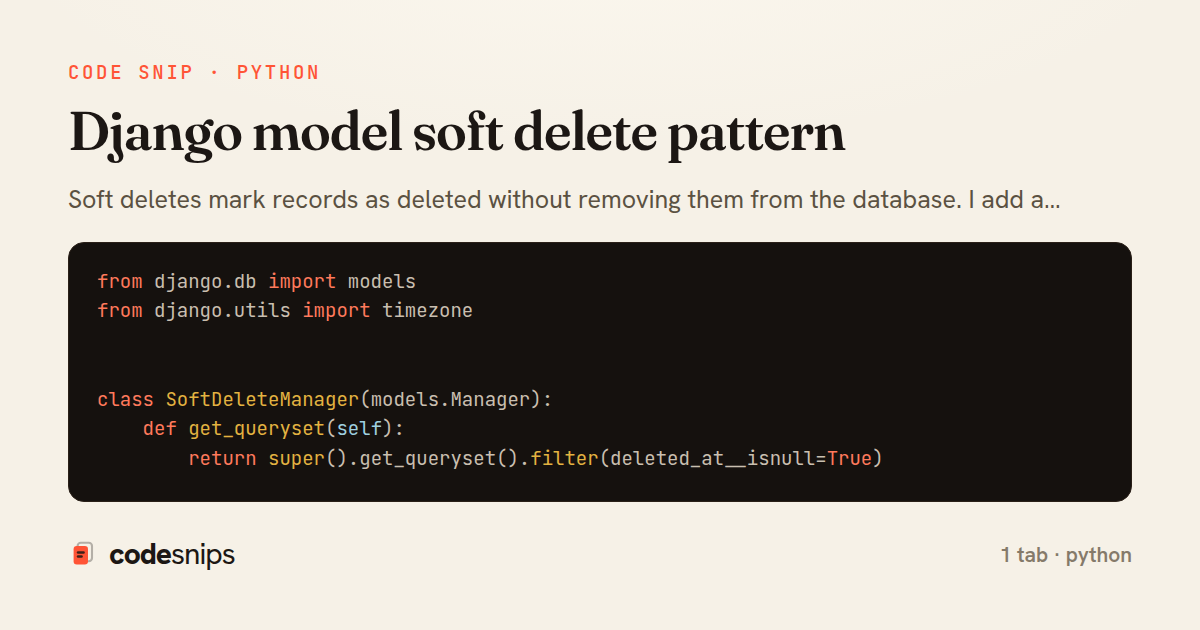
from django.db import models
from django.utils import timezone


class SoftDeleteManager(models.Manager):
    def get_queryset(self):
        return super().get_queryset().filter(deleted_at__isnull=True)


class SoftDeleteModel(models.Model):
    deleted_at = models.DateTimeField(null=True, blank=True, db_index=True)

    objects = SoftDeleteManager()
    all_objects = models.Manager()  # Access all including deleted

    class Meta:
        abstract = True

    def delete(self, using=None, keep_parents=False):
        self.deleted_at = timezone.now()
        self.save()

    def hard_delete(self):
        super().delete()

    def restore(self):
        self.deleted_at = None
        self.save()
1 file · python
Explain with highlit
Soft deletes mark records as deleted without removing them from the database. I add a deleted_at field and override the delete() method. A custom manager excludes soft-deleted records by default. I provide a hard_delete() method for permanent removal. This enables undo functionality and maintains referential integrity. For auditing, soft deletes preserve history. I index deleted_at for query performance. Periodic cleanup jobs can hard-delete old soft-deleted records. This pattern is essential for user-facing delete operations.
Related snips
ruby
class Post < ApplicationRecord
  belongs_to :author, class_name: 'User'
  has_many :comments, dependent: :destroy

  scope :published, -> { where.not(published_at: nil).where('published_at <= ?', Time.current) }
  scope :draft, -> { where(published_at: nil) }
ActiveRecord scopes for reusable query logic
rails
activerecord
patterns
by Alex Kumar
1 tab
python
import os
import stat

for root, _dirs, files in os.walk('/etc'):
    for name in files:
        path = os.path.join(root, name)
Python security audit script for exposed risky filesystem state
python
auditing
host-security
by Kai Nakamura
1 tab
python
class Product(models.Model):
    name = models.CharField(max_length=200)
    slug = models.SlugField(blank=True)
    price = models.DecimalField(max_digits=10, decimal_places=2)
    cost = models.DecimalField(max_digits=10, decimal_places=2)
    margin = models.DecimalField(max_digits=5, decimal_places=2, blank=True)
Django model signals vs overriding save
django
python
models
by Priya Sharma
2 tabs
python
from django.urls import path
from . import views

app_name = 'blog'

urlpatterns = [
Django URL namespacing and reverse lookups
django
python
urls
by Priya Sharma
3 tabs
python
import graphene
from graphene_django import DjangoObjectType
from blog.models import Post, Comment


class PostType(DjangoObjectType):
Django GraphQL with Graphene
django
python
graphql
by Priya Sharma
2 tabs
python
from django.db.models import Count, Avg, Sum, Q, F
from django.views.generic import TemplateView
from products.models import Product, Order, OrderItem


class DashboardView(TemplateView):
Django aggregation with annotate for statistics
django
python
database
by Priya Sharma
1 tab
Share this code
Here's the card — post it anywhere.