python
20 lines · 3 tabs
Priya Sharma
Jan 2026
3 tabs
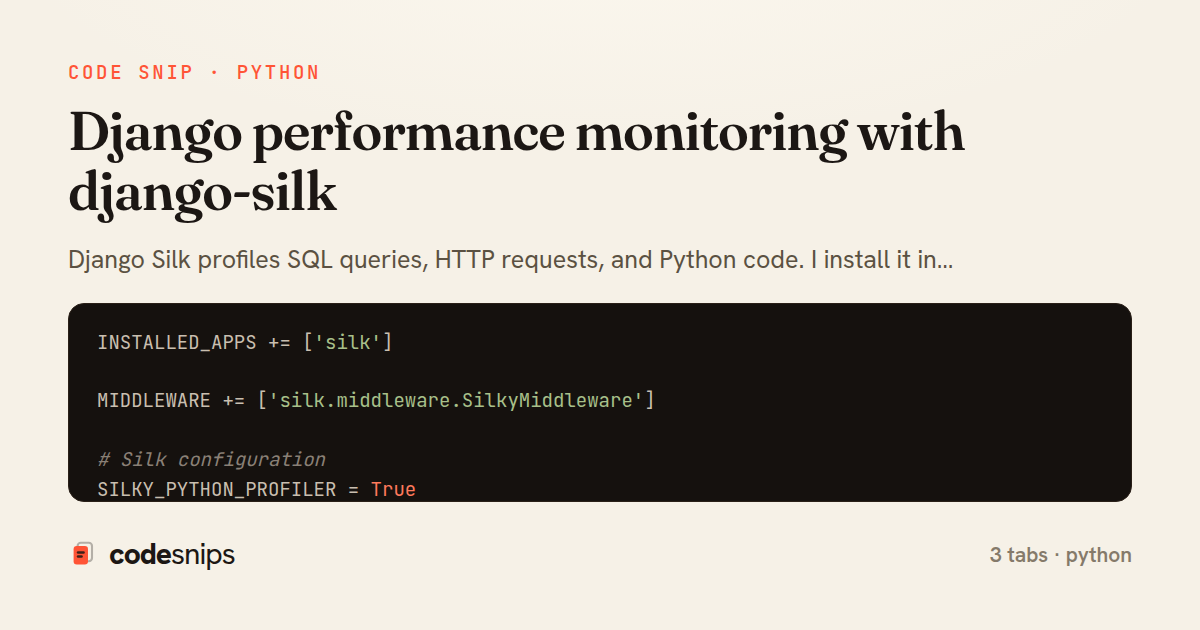
INSTALLED_APPS += ['silk']

MIDDLEWARE += ['silk.middleware.SilkyMiddleware']

# Silk configuration
SILKY_PYTHON_PROFILER = True
SILKY_PYTHON_PROFILER_BINARY = True
SILKY_MAX_REQUEST_BODY_SIZE = -1  # Silk takes anything
SILKY_MAX_RESPONSE_BODY_SIZE = -1
SILKY_INTERCEPT_PERCENT = 100  # Profile all requests in dev
if settings.DEBUG:
    urlpatterns += [path('silk/', include('silk.urls', namespace='silk'))]
from silk.profiling.profiler import silk_profile


@silk_profile(name='Complex Calculation')
def complex_calculation(data):
    # Expensive operation
    result = process(data)
    return result
3 files · python
Explain with highlit
Django Silk profiles SQL queries, HTTP requests, and Python code. I install it in development to identify bottlenecks. It shows query counts, execution times, and duplicate queries per request. The web UI visualizes performance data. I use @silk_profile() decorator for specific functions. Silk helps find N+1 queries and slow endpoints. For production, I use APM tools like New Relic or Datadog. Silk's detailed insights make optimization straightforward. I remove it or disable in production to avoid overhead.
Related snips
python
import os
import stat

for root, _dirs, files in os.walk('/etc'):
    for name in files:
        path = os.path.join(root, name)
Python security audit script for exposed risky filesystem state
python
auditing
host-security
by Kai Nakamura
1 tab
python
class Product(models.Model):
    name = models.CharField(max_length=200)
    slug = models.SlugField(blank=True)
    price = models.DecimalField(max_digits=10, decimal_places=2)
    cost = models.DecimalField(max_digits=10, decimal_places=2)
    margin = models.DecimalField(max_digits=5, decimal_places=2, blank=True)
Django model signals vs overriding save
django
python
models
by Priya Sharma
2 tabs
ruby
require "csv"

class PeopleCsvStream
  include Enumerable

  HEADERS = %w[id full_name email signed_up_at plan].freeze
Resilient CSV Export as a Streamed Response
rails
performance
streaming
by codesnips
3 tabs
ruby
Rails.application.configure do
  config.after_initialize do
    Bullet.enable = true
    Bullet.alert = false
    Bullet.bullet_logger = true
    Bullet.console = true
N+1 query detection with Bullet gem
rails
performance
activerecord
by Alex Kumar
2 tabs
python
from django.urls import path
from . import views

app_name = 'blog'

urlpatterns = [
Django URL namespacing and reverse lookups
django
python
urls
by Priya Sharma
3 tabs
ruby
json.array! @posts do |post|
  json.cache! ['v1', post], expires_in: 1.hour do
    json.id post.id
    json.title post.title
    json.excerpt post.excerpt
    json.published_at post.published_at
Fragment caching for expensive JSON serialization
rails
caching
performance
by Alex Kumar
1 tab
Share this code
Here's the card — post it anywhere.