python
40 lines · 2 tabs
Priya Sharma
Jan 2026
2 tabs
INSTALLED_APPS += ['tenant_schemas']

DATABASE_ROUTERS = ['tenant_schemas.routers.TenantSyncRouter']

MIDDLEWARE = [
    'tenant_schemas.middleware.TenantMiddleware',
    # Other middleware
]

TENANT_MODEL = 'customers.Client'
TENANT_DOMAIN_MODEL = 'customers.Domain'

SHARED_APPS = [
    'tenant_schemas',
    'customers',
    'django.contrib.contenttypes',
    'django.contrib.auth',
]

TENANT_APPS = [
    'django.contrib.admin',
    'blog',
    'shop',
    # Apps with tenant-specific data
]

INSTALLED_APPS = list(set(SHARED_APPS + TENANT_APPS))
from tenant_schemas.models import TenantMixin, DomainMixin
from django.db import models


class Client(TenantMixin):
    name = models.CharField(max_length=100)
    created_on = models.DateField(auto_now_add=True)

    auto_create_schema = True


class Domain(DomainMixin):
    pass
2 files · python
Explain with highlit
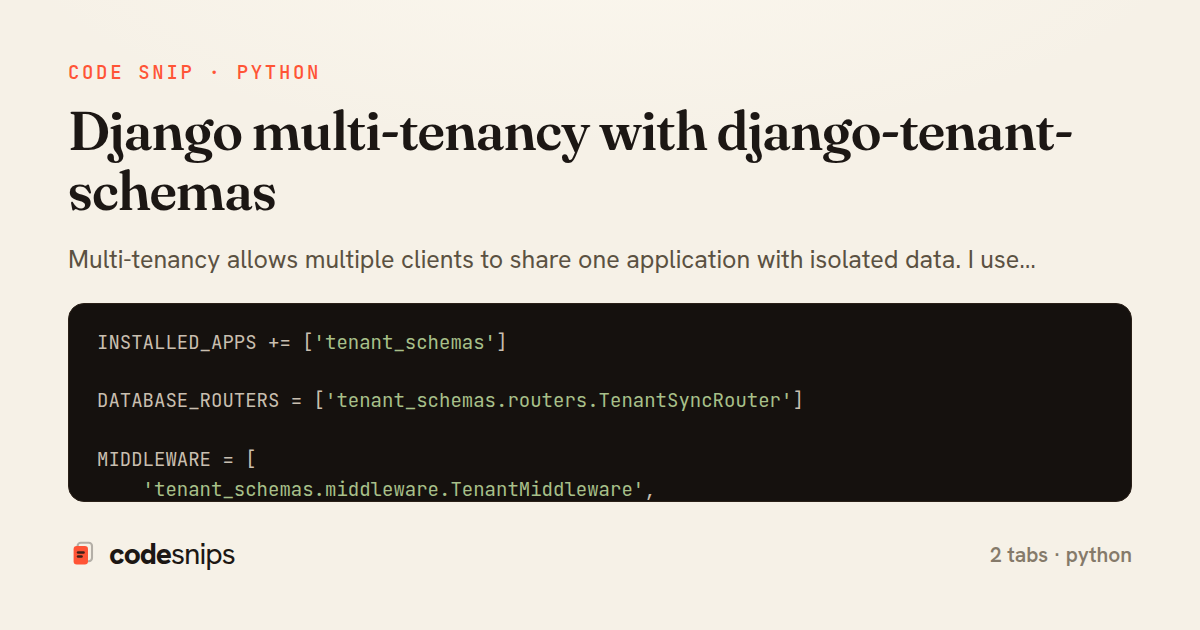
Multi-tenancy allows multiple clients to share one application with isolated data. I use django-tenant-schemas for PostgreSQL schema-based isolation. Each tenant gets a separate schema (database namespace). The middleware routes requests to correct tenant based on domain or subdomain. Shared models go in public schema. This is more efficient than separate databases per tenant. I handle tenant creation with management commands. For simpler needs, row-level tenant filtering might suffice. This architecture scales to thousands of tenants.
Related snips
python
import os
import stat

for root, _dirs, files in os.walk('/etc'):
    for name in files:
        path = os.path.join(root, name)
Python security audit script for exposed risky filesystem state
python
auditing
host-security
by Kai Nakamura
1 tab
python
class Product(models.Model):
    name = models.CharField(max_length=200)
    slug = models.SlugField(blank=True)
    price = models.DecimalField(max_digits=10, decimal_places=2)
    cost = models.DecimalField(max_digits=10, decimal_places=2)
    margin = models.DecimalField(max_digits=5, decimal_places=2, blank=True)
Django model signals vs overriding save
django
python
models
by Priya Sharma
2 tabs
python
from django.urls import path
from . import views

app_name = 'blog'

urlpatterns = [
Django URL namespacing and reverse lookups
django
python
urls
by Priya Sharma
3 tabs
python
import graphene
from graphene_django import DjangoObjectType
from blog.models import Post, Comment


class PostType(DjangoObjectType):
Django GraphQL with Graphene
django
python
graphql
by Priya Sharma
2 tabs
python
from django.db.models import Count, Avg, Sum, Q, F
from django.views.generic import TemplateView
from products.models import Product, Order, OrderItem


class DashboardView(TemplateView):
Django aggregation with annotate for statistics
django
python
database
by Priya Sharma
1 tab
python
from rest_framework import permissions


class IsOwner(permissions.BasePermission):
    """Allow only object owner to access."""
Django REST Framework permissions and authorization
django
python
rest
by Priya Sharma
2 tabs
Share this code
Here's the card — post it anywhere.