class JwtService
  ACCESS_TOKEN_LIFETIME = 15.minutes
  REFRESH_TOKEN_LIFETIME = 7.days
  SECRET = Rails.application.credentials.jwt_secret

  def self.encode_access_token(user_id)
    payload = {
      user_id: user_id,
      exp: ACCESS_TOKEN_LIFETIME.from_now.to_i,
      jti: SecureRandom.uuid
    }
    JWT.encode(payload, SECRET, 'HS256')
  end

  def self.encode_refresh_token(user_id)
    jti = SecureRandom.uuid
    payload = {
      user_id: user_id,
      exp: REFRESH_TOKEN_LIFETIME.from_now.to_i,
      jti: jti,
      type: 'refresh'
    }
    token = JWT.encode(payload, SECRET, 'HS256')
    Rails.cache.write("refresh_token:#{jti}", user_id, expires_in: REFRESH_TOKEN_LIFETIME)
    token
  end

  def self.decode(token)
    JWT.decode(token, SECRET, true, algorithm: 'HS256').first
  rescue JWT::DecodeError
    nil
  end

  def self.revoke_refresh_token(jti)
    Rails.cache.delete("refresh_token:#{jti}")
  end
end
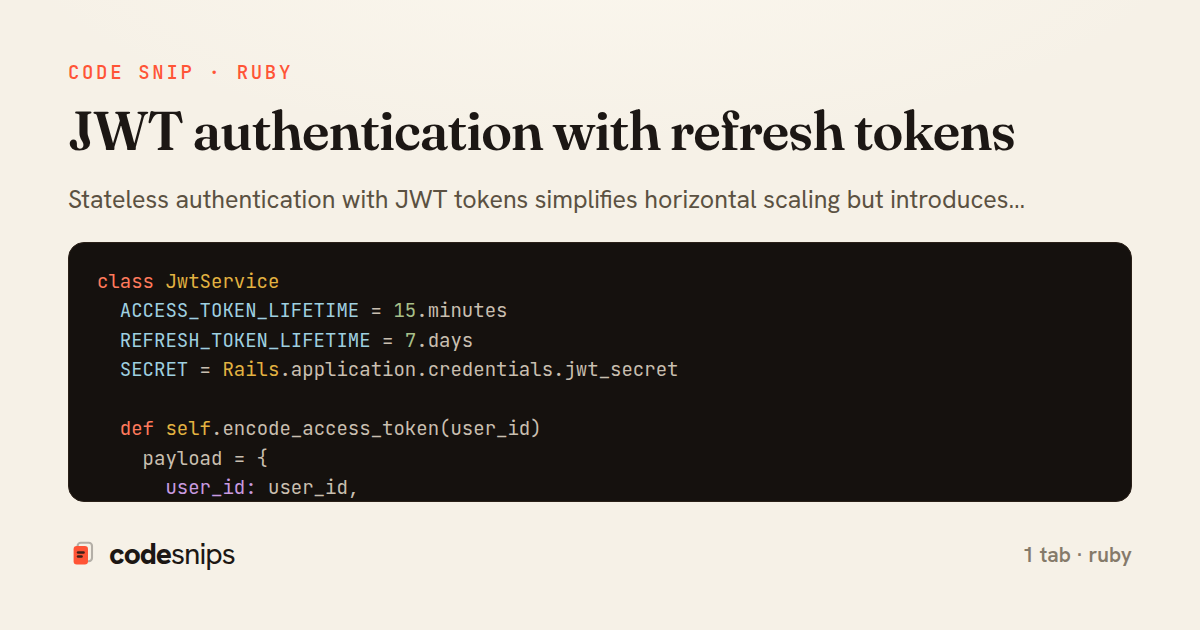
Stateless authentication with JWT tokens simplifies horizontal scaling but introduces security concerns around token lifetime and revocation. I use short-lived access tokens (15 minutes) combined with longer-lived refresh tokens stored in an encrypted HTTP-only cookie. When the access token expires, the client can request a new one using the refresh token without forcing the user to re-authenticate. The refresh token is stored in Redis with a blacklist mechanism so I can revoke sessions immediately when needed. This approach balances security and user experience—users stay logged in across sessions but compromised access tokens have limited blast radius. I also include a jti (JWT ID) claim to enable granular revocation.
Related snips
class CommentsController < ApplicationController
  before_action :set_post

  def create
    @comment = @post.comments.build(comment_params)
System test: asserting Turbo Stream responses
class Post < ApplicationRecord
  belongs_to :author, class_name: 'User'
  has_many :comments, dependent: :destroy

  scope :published, -> { where.not(published_at: nil).where('published_at <= ?', Time.current) }
  scope :draft, -> { where(published_at: nil) }
ActiveRecord scopes for reusable query logic
payload = {
  sub: user.id,
  iss: 'https://auth.example.com',
  aud: 'codesnips-api',
  exp: 15.minutes.from_now.to_i,
  iat: Time.now.to_i,
JWT issuance and verification without common footguns
module Api
  module V1
    class UsersController < BaseController
      def show
        user = User.includes(:profile).find(params[:id])
ETags for conditional requests and caching
class PostsController < ApplicationController
  def index
    @posts = Post.includes(:author)
                 .order(created_at: :desc)
                 .page(params[:page])
                 .per(10)
Turbo Frames: infinite scroll with lazy-loading frame
require "csv"

class PeopleCsvStream
  include Enumerable

  HEADERS = %w[id full_name email signed_up_at plan].freeze
Resilient CSV Export as a Streamed Response
Share this code
Here's the card — post it anywhere.