module ApiErrorHandler
  extend ActiveSupport::Concern

  included do
    rescue_from StandardError, with: :handle_standard_error
    rescue_from ActiveRecord::RecordNotFound, with: :handle_not_found
    rescue_from ActiveRecord::RecordInvalid, with: :handle_validation_error
    rescue_from Api::UnauthorizedError, with: :handle_unauthorized
  end

  private

  def handle_standard_error(exception)
    Rails.logger.error("#{exception.class}: #{exception.message}\n#{exception.backtrace.join("\n")}")
    render json: {
      error: 'INTERNAL_SERVER_ERROR',
      message: 'An unexpected error occurred',
      request_id: request.request_id
    }, status: :internal_server_error
  end

  def handle_not_found(exception)
    render json: {
      error: 'NOT_FOUND',
      message: exception.message,
      request_id: request.request_id
    }, status: :not_found
  end

  def handle_validation_error(exception)
    render json: {
      error: 'VALIDATION_ERROR',
      message: 'Validation failed',
      details: exception.record.errors.as_json,
      request_id: request.request_id
    }, status: :unprocessable_entity
  end

  def handle_unauthorized(exception)
    render json: {
      error: 'UNAUTHORIZED',
      message: exception.message,
      request_id: request.request_id
    }, status: :unauthorized
  end
end
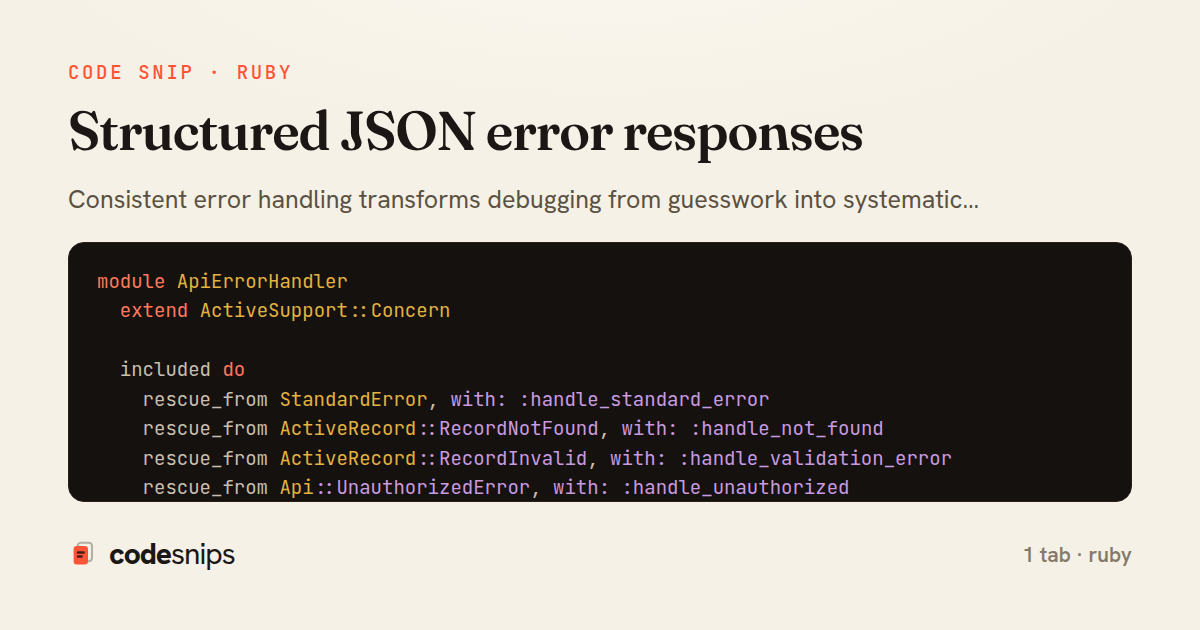
Consistent error handling transforms debugging from guesswork into systematic troubleshooting. I use a rescue handler that catches exceptions globally and transforms them into a standard JSON structure containing an error code, human-readable message, and optional details hash for validation failures. This pattern ensures every API response follows the same contract regardless of which layer raised the exception. I also include a request_id in error responses so clients can reference specific failures when reporting issues. For production systems, I log the full exception with backtrace server-side while returning sanitized messages to clients to avoid leaking implementation details. Custom exception classes like Api::UnauthorizedError map to specific HTTP status codes.
Related snips
class CommentsController < ApplicationController
  before_action :set_post

  def create
    @comment = @post.comments.build(comment_params)
System test: asserting Turbo Stream responses
class Post < ApplicationRecord
  belongs_to :author, class_name: 'User'
  has_many :comments, dependent: :destroy

  scope :published, -> { where.not(published_at: nil).where('published_at <= ?', Time.current) }
  scope :draft, -> { where(published_at: nil) }
ActiveRecord scopes for reusable query logic
payload = {
  sub: user.id,
  iss: 'https://auth.example.com',
  aud: 'codesnips-api',
  exp: 15.minutes.from_now.to_i,
  iat: Time.now.to_i,
JWT issuance and verification without common footguns
module Api
  module V1
    class UsersController < BaseController
      def show
        user = User.includes(:profile).find(params[:id])
ETags for conditional requests and caching
class PostsController < ApplicationController
  def index
    @posts = Post.includes(:author)
                 .order(created_at: :desc)
                 .page(params[:page])
                 .per(10)
Turbo Frames: infinite scroll with lazy-loading frame
require "csv"

class PeopleCsvStream
  include Enumerable

  HEADERS = %w[id full_name email signed_up_at plan].freeze
Resilient CSV Export as a Streamed Response
Share this code
Here's the card — post it anywhere.