class PostSerializer < ActiveModel::Serializer
  attributes :id, :title, :excerpt, :body, :published_at, :views, :likes_count, :comments_count

  attribute :can_edit, if: :current_user_can_edit?

  belongs_to :author, serializer: UserSummarySerializer
  has_many :comments, if: :include_comments?

  def excerpt
    object.body&.truncate(200)
  end

  def current_user_can_edit?
    scope && (scope.id == object.author_id || scope.admin?)
  end

  def include_comments?
    instance_options[:include_comments] == true
  end
end
class UserSummarySerializer < ActiveModel::Serializer
  attributes :id, :name, :avatar_url, :profile_url

  def profile_url
    Rails.application.routes.url_helpers.user_path(object)
  end
end
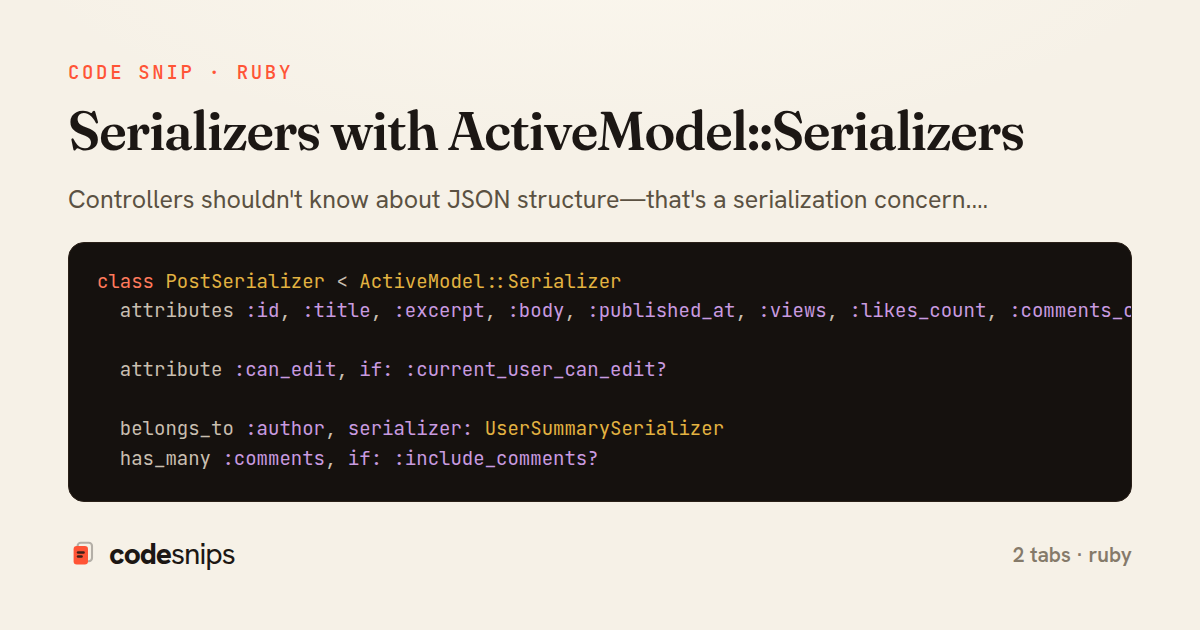
Controllers shouldn't know about JSON structure—that's a serialization concern. ActiveModel::Serializers (AMS) separates presentation from business logic by defining dedicated serializer classes for each model. Serializers specify exactly which attributes to expose and handle nested associations cleanly. I can create different serializers for different contexts (list view vs detail view) without cluttering controllers. The if: option conditionally includes fields based on permissions or feature flags. AMS also supports meta attributes and links for JSONAPI-compliant responses. For high-performance APIs, I sometimes use simpler solutions like Jbuilder or custom PORO serializers, but AMS provides good defaults with minimal boilerplate for standard REST APIs.
Related snips
class CommentsController < ApplicationController
  before_action :set_post

  def create
    @comment = @post.comments.build(comment_params)
System test: asserting Turbo Stream responses
class Post < ApplicationRecord
  belongs_to :author, class_name: 'User'
  has_many :comments, dependent: :destroy

  scope :published, -> { where.not(published_at: nil).where('published_at <= ?', Time.current) }
  scope :draft, -> { where(published_at: nil) }
ActiveRecord scopes for reusable query logic
payload = {
  sub: user.id,
  iss: 'https://auth.example.com',
  aud: 'codesnips-api',
  exp: 15.minutes.from_now.to_i,
  iat: Time.now.to_i,
JWT issuance and verification without common footguns
module Api
  module V1
    class UsersController < BaseController
      def show
        user = User.includes(:profile).find(params[:id])
ETags for conditional requests and caching
class PostsController < ApplicationController
  def index
    @posts = Post.includes(:author)
                 .order(created_at: :desc)
                 .page(params[:page])
                 .per(10)
Turbo Frames: infinite scroll with lazy-loading frame
require "csv"

class PeopleCsvStream
  include Enumerable

  HEADERS = %w[id full_name email signed_up_at plan].freeze
Resilient CSV Export as a Streamed Response
Share this code
Here's the card — post it anywhere.