ruby
35 lines · 1 tab
Alex Kumar
Jan 2026
1 tab
module ApiRequestLogger
  extend ActiveSupport::Concern

  included do
    around_action :log_api_request
  end

  private

  def log_api_request
    start_time = Time.current

    yield

    duration = ((Time.current - start_time) * 1000).round(2)

    log_data = {
      request_id: request.request_id,
      method: request.method,
      path: request.path,
      params: filtered_params,
      status: response.status,
      duration_ms: duration,
      user_id: current_user&.id,
      ip: request.remote_ip,
      user_agent: request.user_agent
    }

    Rails.logger.info("API Request: #{log_data.to_json}")
  end

  def filtered_params
    params.except(:controller, :action, :password, :password_confirmation, :token).to_unsafe_h
  end
end
1 file · ruby
Explain with highlit
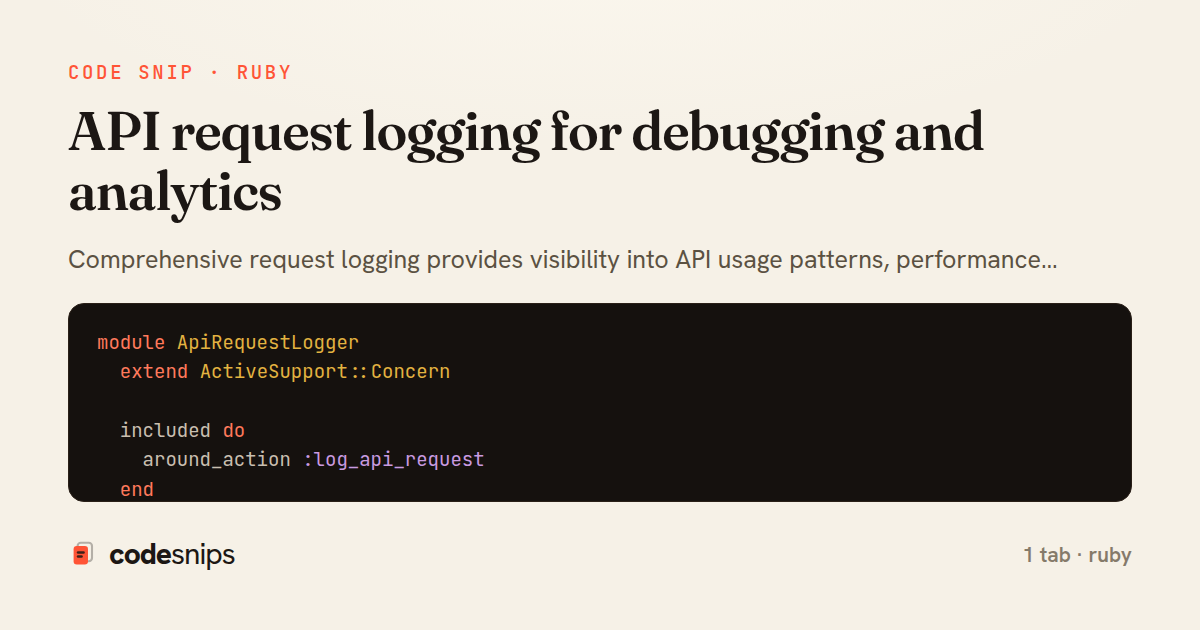
Comprehensive request logging provides visibility into API usage patterns, performance bottlenecks, and security incidents. I log structured JSON that includes request method, path, parameters (sanitized to exclude passwords), response status, duration, and user context. For production systems, I send logs to a centralized aggregation service like Datadog or CloudWatch where I can query and alert on patterns. The key is balancing detail with noise—I avoid logging full request bodies for performance reasons, instead sampling them at low volume or in staging environments. Request IDs tie together all log entries for a single request, making distributed tracing possible without heavyweight instrumentation.
Related snips
go
package api

import (
  "net/http"
  "runtime/debug"
)
Expose build metadata for debugging deploys
go
observability
build
by Leah Thompson
1 tab
ruby
class CommentsController < ApplicationController
  before_action :set_post

  def create
    @comment = @post.comments.build(comment_params)
System test: asserting Turbo Stream responses
rails
hotwire
turbo
by codesnips
4 tabs
ruby
class Post < ApplicationRecord
  belongs_to :author, class_name: 'User'
  has_many :comments, dependent: :destroy

  scope :published, -> { where.not(published_at: nil).where('published_at <= ?', Time.current) }
  scope :draft, -> { where(published_at: nil) }
ActiveRecord scopes for reusable query logic
rails
activerecord
patterns
by Alex Kumar
1 tab
ruby
module Api
  module V1
    class UsersController < BaseController
      def show
        user = User.includes(:profile).find(params[:id])
ETags for conditional requests and caching
rails
caching
http-caching
by Alex Kumar
1 tab
ruby
class PostsController < ApplicationController
  def index
    @posts = Post.includes(:author)
                 .order(created_at: :desc)
                 .page(params[:page])
                 .per(10)
Turbo Frames: infinite scroll with lazy-loading frame
rails
turbo
hotwire
by codesnips
4 tabs
ruby
require "csv"

class PeopleCsvStream
  include Enumerable

  HEADERS = %w[id full_name email signed_up_at plan].freeze
Resilient CSV Export as a Streamed Response
rails
performance
streaming
by codesnips
3 tabs
Share this code
Here's the card — post it anywhere.