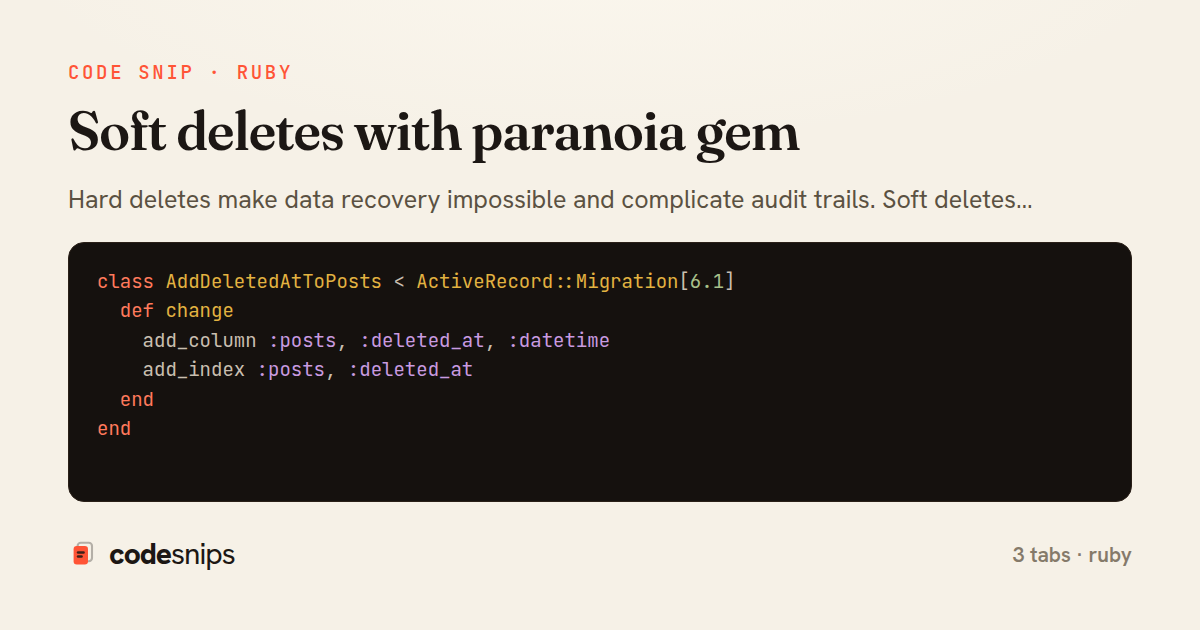
class AddDeletedAtToPosts < ActiveRecord::Migration[6.1]
  def change
    add_column :posts, :deleted_at, :datetime
    add_index :posts, :deleted_at
  end
end
class Post < ApplicationRecord
  acts_as_paranoid

  belongs_to :author, class_name: 'User'
  has_many :comments, dependent: :destroy

  validates :title, presence: true

  # Custom scope to find recently deleted posts
  scope :recently_deleted, -> { only_deleted.where('deleted_at > ?', 7.days.ago) }
end
module Api
  module V1
    class PostsController < BaseController
      def destroy
        post = current_user.posts.find(params[:id])
        post.destroy

        render json: { message: 'Post deleted successfully' }, status: :ok
      end

      def restore
        post = current_user.posts.with_deleted.find(params[:id])
        post.restore

        render json: post, status: :ok
      end
    end
  end
end
Hard deletes make data recovery impossible and complicate audit trails. Soft deletes mark records as deleted without removing them from the database, preserving history and enabling undo functionality. The paranoia gem adds a deleted_at timestamp column and overrides ActiveRecord's destroy method to set the timestamp instead of running DELETE. Queries automatically exclude soft-deleted records unless you use with_deleted or only_deleted scopes. This is valuable for user accounts, content moderation, and any domain where accidental deletion is costly. The downside is that unique indexes need to account for deleted records, and table sizes grow over time. I periodically archive truly old deleted records to separate tables.
Related snips
class CommentsController < ApplicationController
  before_action :set_post

  def create
    @comment = @post.comments.build(comment_params)
System test: asserting Turbo Stream responses
class Post < ApplicationRecord
  belongs_to :author, class_name: 'User'
  has_many :comments, dependent: :destroy

  scope :published, -> { where.not(published_at: nil).where('published_at <= ?', Time.current) }
  scope :draft, -> { where(published_at: nil) }
ActiveRecord scopes for reusable query logic
module Api
  module V1
    class UsersController < BaseController
      def show
        user = User.includes(:profile).find(params[:id])
ETags for conditional requests and caching
class PostsController < ApplicationController
  def index
    @posts = Post.includes(:author)
                 .order(created_at: :desc)
                 .page(params[:page])
                 .per(10)
Turbo Frames: infinite scroll with lazy-loading frame
require "csv"

class PeopleCsvStream
  include Enumerable

  HEADERS = %w[id full_name email signed_up_at plan].freeze
Resilient CSV Export as a Streamed Response
<form data-controller="query-sync" data-action="change->query-sync#apply">
  <select name="status" class="rounded border p-2">
    <option value="">Any</option>
    <option value="open">Open</option>
    <option value="closed">Closed</option>
  </select>
Filter UI that syncs query params via Stimulus (no front-end router)
Share this code
Here's the card — post it anywhere.