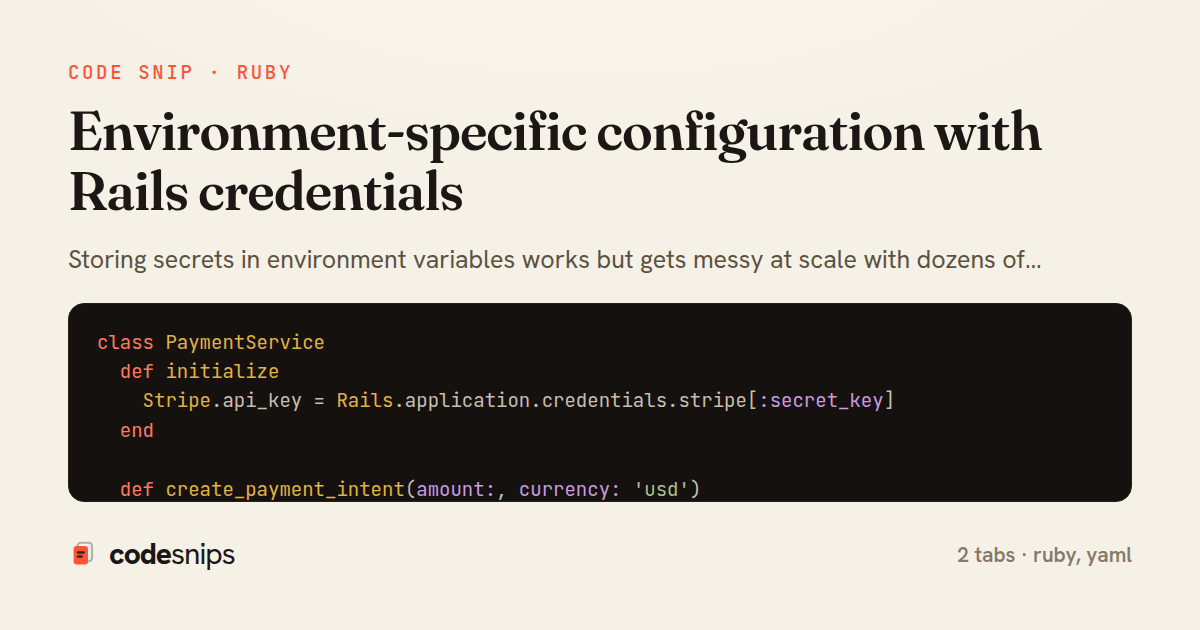
class PaymentService
  def initialize
    Stripe.api_key = Rails.application.credentials.stripe[:secret_key]
  end

  def create_payment_intent(amount:, currency: 'usd')
    Stripe::PaymentIntent.create(
      amount: amount,
      currency: currency
    )
  end
end
# Encrypted file, edit with: rails credentials:edit --environment production
secret_key_base: [encrypted]

database:
  url: postgresql://user:pass@host:5432/dbname

redis:
  url: redis://redis-host:6379/0

stripe:
  publishable_key: pk_live_...
  secret_key: sk_live_...
  webhook_secret: whsec_...

aws:
  access_key_id: AKIA...
  secret_access_key: [encrypted]
  region: us-east-1
  bucket: production-uploads

jwt_secret: [encrypted]
Storing secrets in environment variables works but gets messy at scale with dozens of keys. Rails encrypted credentials provide a structured alternative where secrets live in version-controlled credentials.yml.enc files, encrypted with a master key stored outside the repo. I can have environment-specific credentials like credentials/production.yml.enc that override shared defaults. The rails credentials:edit command decrypts, opens an editor, and re-encrypts on save. This approach keeps sensitive configuration centralized and auditable while preventing accidental commits of plaintext secrets. The master key must be injected at deploy time via RAILS_MASTER_KEY env var or config/master.key file. I organize credentials hierarchically with namespaces for each service.
Related snips
class CommentsController < ApplicationController
  before_action :set_post

  def create
    @comment = @post.comments.build(comment_params)
System test: asserting Turbo Stream responses
class Post < ApplicationRecord
  belongs_to :author, class_name: 'User'
  has_many :comments, dependent: :destroy

  scope :published, -> { where.not(published_at: nil).where('published_at <= ?', Time.current) }
  scope :draft, -> { where(published_at: nil) }
ActiveRecord scopes for reusable query logic
payload = {
  sub: user.id,
  iss: 'https://auth.example.com',
  aud: 'codesnips-api',
  exp: 15.minutes.from_now.to_i,
  iat: Time.now.to_i,
JWT issuance and verification without common footguns
module Api
  module V1
    class UsersController < BaseController
      def show
        user = User.includes(:profile).find(params[:id])
ETags for conditional requests and caching
class PostsController < ApplicationController
  def index
    @posts = Post.includes(:author)
                 .order(created_at: :desc)
                 .page(params[:page])
                 .per(10)
Turbo Frames: infinite scroll with lazy-loading frame
require "csv"

class PeopleCsvStream
  include Enumerable

  HEADERS = %w[id full_name email signed_up_at plan].freeze
Resilient CSV Export as a Streamed Response
Share this code
Here's the card — post it anywhere.