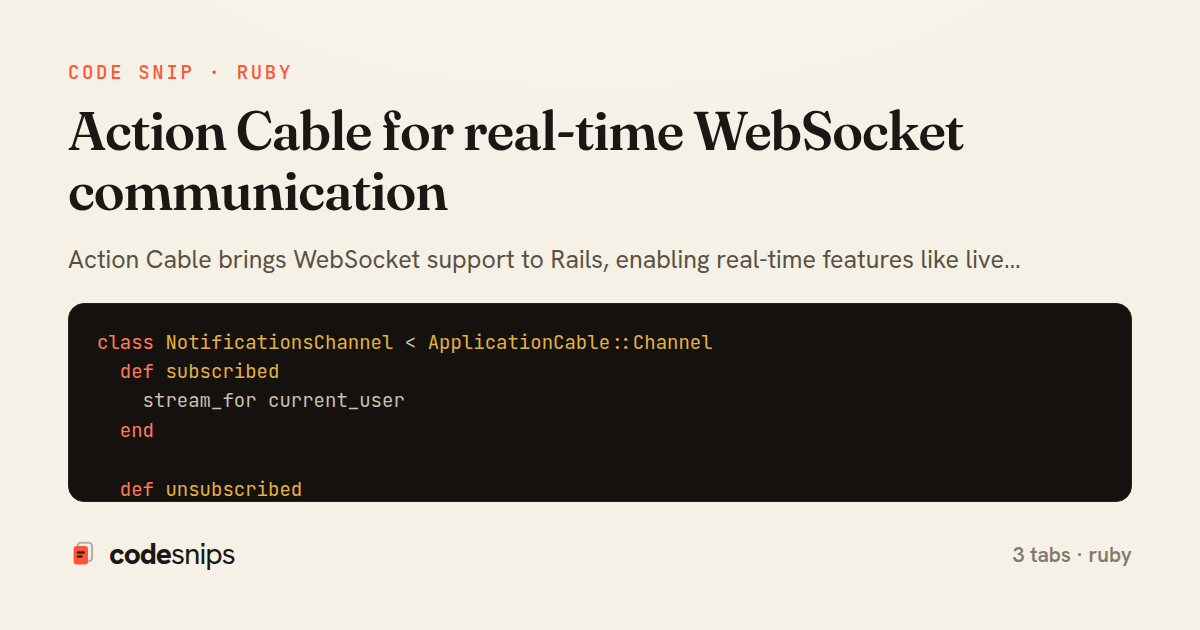
class NotificationsChannel < ApplicationCable::Channel
  def subscribed
    stream_for current_user
  end

  def unsubscribed
    stop_all_streams
  end
end
module ApplicationCable
  class Connection < ActionCable::Connection::Base
    identified_by :current_user

    def connect
      self.current_user = find_verified_user
    end

    private

    def find_verified_user
      token = request.params[:token]
      payload = JwtService.decode(token)

      if payload && (user = User.find_by(id: payload['user_id']))
        user
      else
        reject_unauthorized_connection
      end
    end
  end
end
class Notification < ApplicationRecord
  belongs_to :user

  after_create_commit :broadcast_notification

  private

  def broadcast_notification
    NotificationsChannel.broadcast_to(
      user,
      {
        id: id,
        message: message,
        created_at: created_at,
        read: false
      }
    )
  end
end
Action Cable brings WebSocket support to Rails, enabling real-time features like live notifications, collaborative editing, or chat systems. Clients subscribe to channels that broadcast updates when server-side events occur. I use Redis as the pub/sub backend so messages propagate across multiple application servers. Each channel class defines subscribed and unsubscribed lifecycle hooks, and broadcast happens via ActionCable.server.broadcast. Authentication happens during the connection handshake using the same session-based or token-based approach as HTTP requests. The key challenge is scaling—WebSockets hold persistent connections, so I often isolate Action Cable servers from HTTP servers to optimize resource allocation independently.
Related snips
class CommentsController < ApplicationController
  before_action :set_post

  def create
    @comment = @post.comments.build(comment_params)
System test: asserting Turbo Stream responses
class Post < ApplicationRecord
  belongs_to :author, class_name: 'User'
  has_many :comments, dependent: :destroy

  scope :published, -> { where.not(published_at: nil).where('published_at <= ?', Time.current) }
  scope :draft, -> { where(published_at: nil) }
ActiveRecord scopes for reusable query logic
module Api
  module V1
    class UsersController < BaseController
      def show
        user = User.includes(:profile).find(params[:id])
ETags for conditional requests and caching
class PostsController < ApplicationController
  def index
    @posts = Post.includes(:author)
                 .order(created_at: :desc)
                 .page(params[:page])
                 .per(10)
Turbo Frames: infinite scroll with lazy-loading frame
require "csv"

class PeopleCsvStream
  include Enumerable

  HEADERS = %w[id full_name email signed_up_at plan].freeze
Resilient CSV Export as a Streamed Response
<form data-controller="query-sync" data-action="change->query-sync#apply">
  <select name="status" class="rounded border p-2">
    <option value="">Any</option>
    <option value="open">Open</option>
    <option value="closed">Closed</option>
  </select>
Filter UI that syncs query params via Stimulus (no front-end router)
Share this code
Here's the card — post it anywhere.