class AddMetadataToUsers < ActiveRecord::Migration[6.1]
  def change
    add_column :users, :metadata, :jsonb, default: {}, null: false
    add_index :users, :metadata, using: :gin
  end
end
class User < ApplicationRecord
  store_accessor :metadata, :theme, :timezone, :email_notifications, :beta_features

  # Query users with specific metadata values
  scope :with_beta_features, -> { where("metadata @> ?", { beta_features: true }.to_json) }
  scope :in_timezone, ->(tz) { where("metadata->>'timezone' = ?", tz) }

  # Default values
  after_initialize do
    self.metadata ||= {}
    self.theme ||= 'light'
    self.timezone ||= 'UTC'
    self.email_notifications = true if email_notifications.nil?
  end
end
module Api
  module V1
    class UserPreferencesController < BaseController
      before_action :authenticate_user!

      def update
        current_user.update!(preference_params)
        render json: { metadata: current_user.metadata }, status: :ok
      end

      private

      def preference_params
        params.require(:preferences).permit(:theme, :timezone, :email_notifications, beta_features: [])
      end
    end
  end
end
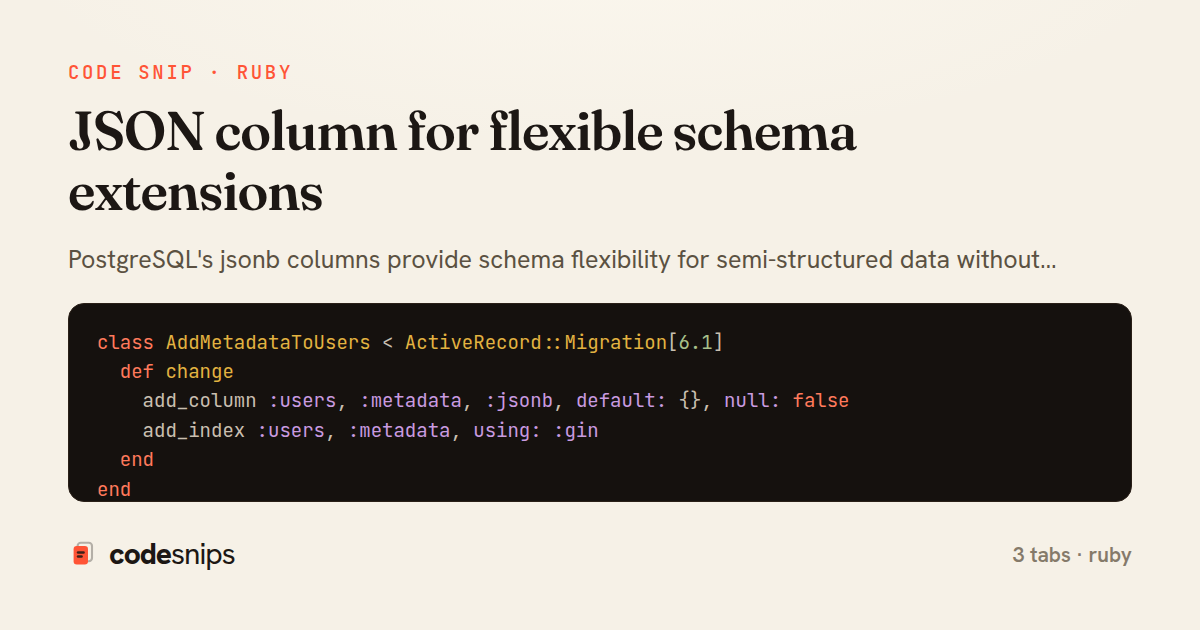
PostgreSQL's jsonb columns provide schema flexibility for semi-structured data without sacrificing query performance. I use JSON columns for user preferences, feature flags, or metadata that varies by record type. Unlike traditional EAV patterns, jsonb supports indexing and efficient queries via GIN indexes and operators like @> (contains) or -> (extract). The store_accessor method creates virtual attributes that feel like regular columns while being stored in the JSON field. This approach balances structure and flexibility—core attributes remain as columns for performance and integrity, while optional or variable attributes live in JSON. The downside is reduced type safety and schema enforcement compared to dedicated columns.
Related snips
class CommentsController < ApplicationController
  before_action :set_post

  def create
    @comment = @post.comments.build(comment_params)
System test: asserting Turbo Stream responses
-- Simple function
CREATE OR REPLACE FUNCTION get_full_name(
  first_name VARCHAR,
  last_name VARCHAR
)
RETURNS VARCHAR AS $$
Stored procedures and functions in PostgreSQL
class Post < ApplicationRecord
  belongs_to :author, class_name: 'User'
  has_many :comments, dependent: :destroy

  scope :published, -> { where.not(published_at: nil).where('published_at <= ?', Time.current) }
  scope :draft, -> { where(published_at: nil) }
ActiveRecord scopes for reusable query logic
module Api
  module V1
    class UsersController < BaseController
      def show
        user = User.includes(:profile).find(params[:id])
ETags for conditional requests and caching
class PostsController < ApplicationController
  def index
    @posts = Post.includes(:author)
                 .order(created_at: :desc)
                 .page(params[:page])
                 .per(10)
Turbo Frames: infinite scroll with lazy-loading frame
require "csv"

class PeopleCsvStream
  include Enumerable

  HEADERS = %w[id full_name email signed_up_at plan].freeze
Resilient CSV Export as a Streamed Response
Share this code
Here's the card — post it anywhere.