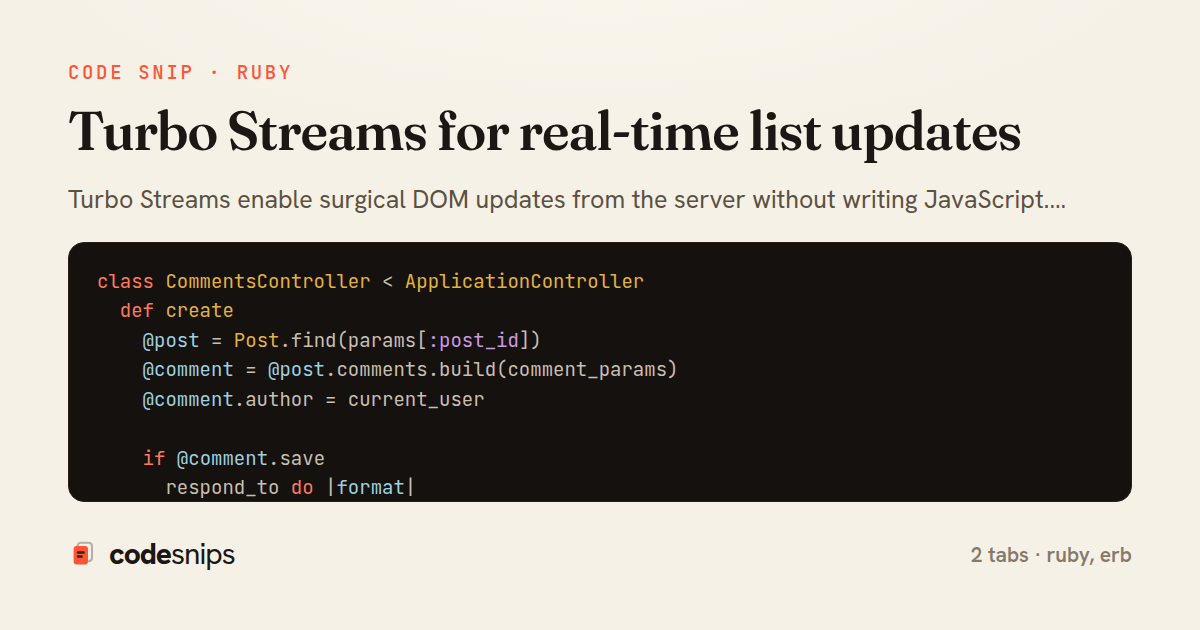
class CommentsController < ApplicationController
  def create
    @post = Post.find(params[:post_id])
    @comment = @post.comments.build(comment_params)
    @comment.author = current_user

    if @comment.save
      respond_to do |format|
        format.turbo_stream do
          render turbo_stream: [
            turbo_stream.append("comments", partial: "comments/comment", locals: { comment: @comment }),
            turbo_stream.update("comment_count", html: "#{@post.comments.count} comments"),
            turbo_stream.replace("new_comment", partial: "comments/form", locals: { post: @post, comment: Comment.new })
          ]
        end
        format.html { redirect_to @post }
      end
    else
      render :new, status: :unprocessable_entity
    end
  end

  private

  def comment_params
    params.require(:comment).permit(:body)
  end
end
<div class="post">
  <h1><%= @post.title %></h1>
  <%= simple_format @post.body %>

  <div class="comments-section mt-8">
    <h2 id="comment_count"><%= @post.comments.count %> comments</h2>

    <div id="comments" class="space-y-4 my-6">
      <%= render @post.comments %>
    </div>

    <div id="new_comment">
      <%= render "comments/form", post: @post, comment: Comment.new %>
    </div>
  </div>
</div>
Turbo Streams enable surgical DOM updates from the server without writing JavaScript. After a successful form submission, instead of redirecting, I return a Turbo Stream response that appends, prepends, replaces, or removes specific elements. This is perfect for creating items in lists, updating counters, or showing flash messages. Combined with Action Cable, Turbo Streams power real-time collaborative features—when one user creates a comment, all viewers see it instantly via a broadcast. The seven stream actions (append, prepend, replace, update, remove, before, after) cover most UI update patterns. I use the turbo_stream_from helper to subscribe to broadcast channels and turbo_stream.append in controllers to generate the response.
Related snips
class CommentsController < ApplicationController
  before_action :set_post

  def create
    @comment = @post.comments.build(comment_params)
System test: asserting Turbo Stream responses
class Post < ApplicationRecord
  belongs_to :author, class_name: 'User'
  has_many :comments, dependent: :destroy

  scope :published, -> { where.not(published_at: nil).where('published_at <= ?', Time.current) }
  scope :draft, -> { where(published_at: nil) }
ActiveRecord scopes for reusable query logic
module Api
  module V1
    class UsersController < BaseController
      def show
        user = User.includes(:profile).find(params[:id])
ETags for conditional requests and caching
class PostsController < ApplicationController
  def index
    @posts = Post.includes(:author)
                 .order(created_at: :desc)
                 .page(params[:page])
                 .per(10)
Turbo Frames: infinite scroll with lazy-loading frame
require "csv"

class PeopleCsvStream
  include Enumerable

  HEADERS = %w[id full_name email signed_up_at plan].freeze
Resilient CSV Export as a Streamed Response
<form data-controller="query-sync" data-action="change->query-sync#apply">
  <select name="status" class="rounded border p-2">
    <option value="">Any</option>
    <option value="open">Open</option>
    <option value="closed">Closed</option>
  </select>
Filter UI that syncs query params via Stimulus (no front-end router)
Share this code
Here's the card — post it anywhere.