ruby
103 lines · 2 tabs
Maya Patel
Jan 2026
2 tabs
module Posts
  class CreateService
    def initialize(author:, params:)
      @author = author
      @params = params
    end

    def call
      ActiveRecord::Base.transaction do
        create_post
        attach_images if @params[:images].present?
        notify_followers
        schedule_publication if @post.scheduled?

        Result.success(post: @post)
      end
    rescue ActiveRecord::RecordInvalid => e
      Result.failure(errors: e.record.errors.full_messages)
    rescue => e
      Rails.logger.error "Failed to create post: #{e.message}"
      Result.failure(errors: ['An unexpected error occurred'])
    end

    private

    def create_post
      @post = @author.posts.create!(
        title: @params[:title],
        body: @params[:body],
        status: @params[:status] || 'draft'
      )
    end

    def attach_images
      @params[:images].each do |blob_id|
        @post.images.attach(blob_id)
      end
    end

    def notify_followers
      return unless @post.published?

      NotifyFollowersJob.perform_later(@post.id)
    end

    def schedule_publication
      PublishPostJob.set(wait_until: @post.publish_at).perform_later(@post.id)
    end
  end

  class Result
    attr_reader :data, :errors

    def self.success(data = {})
      new(success: true, data: data)
    end

    def self.failure(errors:)
      new(success: false, errors: errors)
    end

    def initialize(success:, data: {}, errors: [])
      @success = success
      @data = data
      @errors = errors
    end

    def success?
      @success
    end

    def failure?
      !@success
    end
  end
end
module Api
  module V1
    class PostsController < ApplicationController
      def create
        result = Posts::CreateService.new(
          author: current_user,
          params: post_params
        ).call

        if result.success?
          render json: result.data[:post],
                 serializer: PostSerializer,
                 status: :created
        else
          render json: { errors: result.errors },
                 status: :unprocessable_entity
        end
      end

      private

      def post_params
        params.require(:post).permit(:title, :body, :status, images: [])
      end
    end
  end
end
2 files · ruby
Explain with highlit
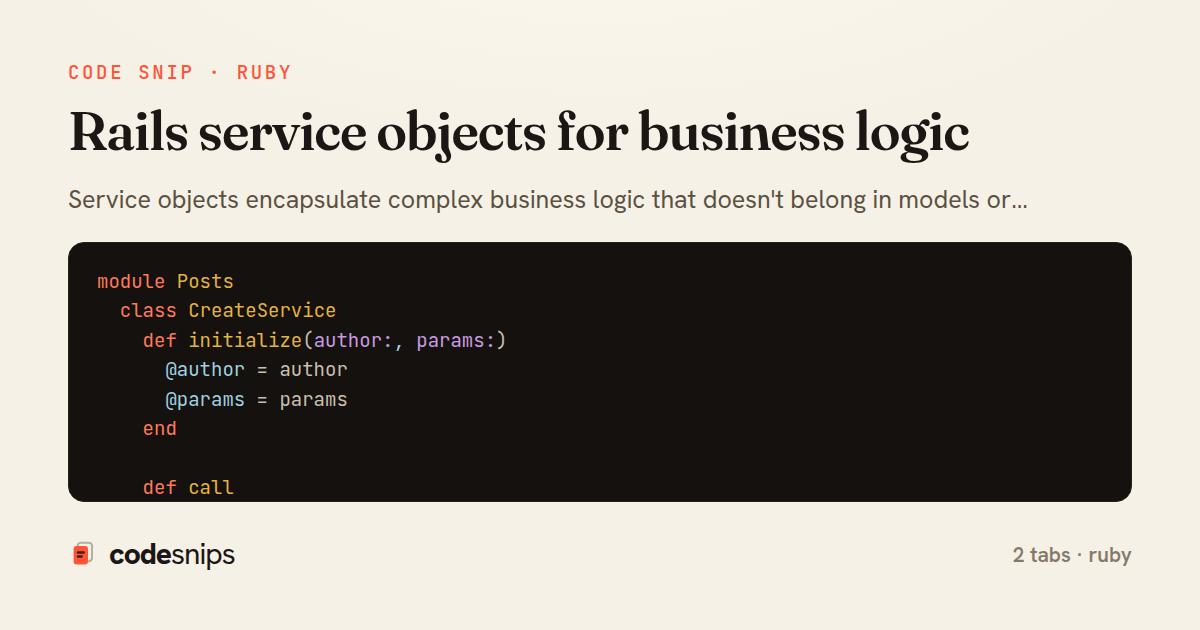
Service objects encapsulate complex business logic that doesn't belong in models or controllers. Each service performs one operation, like creating a post with side effects, processing a payment, or importing data. I create services in app/services with a single public call method. Services return result objects indicating success/failure with data or errors. This pattern keeps controllers thin—they orchestrate but don't implement business logic. Services are easily testable in isolation and reusable across controllers, jobs, and rake tasks. For multi-step operations, I chain services or use saga patterns. This architecture scales well as applications grow.
Related snips
ruby
class CommentsController < ApplicationController
  before_action :set_post

  def create
    @comment = @post.comments.build(comment_params)
System test: asserting Turbo Stream responses
rails
hotwire
turbo
by codesnips
4 tabs
ruby
class Post < ApplicationRecord
  belongs_to :author, class_name: 'User'
  has_many :comments, dependent: :destroy

  scope :published, -> { where.not(published_at: nil).where('published_at <= ?', Time.current) }
  scope :draft, -> { where(published_at: nil) }
ActiveRecord scopes for reusable query logic
rails
activerecord
patterns
by Alex Kumar
1 tab
ruby
module Api
  module V1
    class UsersController < BaseController
      def show
        user = User.includes(:profile).find(params[:id])
ETags for conditional requests and caching
rails
caching
http-caching
by Alex Kumar
1 tab
ruby
class PostsController < ApplicationController
  def index
    @posts = Post.includes(:author)
                 .order(created_at: :desc)
                 .page(params[:page])
                 .per(10)
Turbo Frames: infinite scroll with lazy-loading frame
rails
turbo
hotwire
by codesnips
4 tabs
ruby
require "csv"

class PeopleCsvStream
  include Enumerable

  HEADERS = %w[id full_name email signed_up_at plan].freeze
Resilient CSV Export as a Streamed Response
rails
performance
streaming
by codesnips
3 tabs
erb
<form data-controller="query-sync" data-action="change->query-sync#apply">
  <select name="status" class="rounded border p-2">
    <option value="">Any</option>
    <option value="open">Open</option>
    <option value="closed">Closed</option>
  </select>
Filter UI that syncs query params via Stimulus (no front-end router)
rails
hotwire
stimulus
by Henry Kim
2 tabs
Share this code
Here's the card — post it anywhere.